We use cookies and similar technologies on our website to enable some essential functions for you. Learn more.



-
![MC110 Dual-Sided]() MC110 Dual-Sided Item#: PR01100002Price $1,256.99 MSRP $1,795.00You Save: $538.01
MC110 Dual-Sided Item#: PR01100002Price $1,256.99 MSRP $1,795.00You Save: $538.01- Dual-sided
- Direct to card printing
- Contact or Contactless Encoding Options Available
-
![PR02100002]() MC210 Direct-to-Card Printer / Dual Side / 300dpi Item#: PR02100002Price $1,536.99 MSRP $2,195.00You Save: $658.01
MC210 Direct-to-Card Printer / Dual Side / 300dpi Item#: PR02100002Price $1,536.99 MSRP $2,195.00You Save: $658.01- Dual-sided
- Direct to card printing
- LCD Display
- Encoding Options Available
-
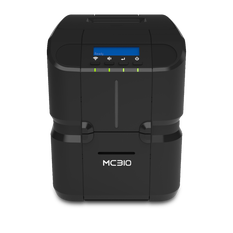
![PR00300002]() MC310 Direct-to-Card Printer / Dual Side / 300dpi / Item#: PR00300002Price $1,886.99 MSRP $2,695.00You Save: $808.01
MC310 Direct-to-Card Printer / Dual Side / 300dpi / Item#: PR00300002Price $1,886.99 MSRP $2,695.00You Save: $808.01- Dual-sided
- Direct to card printing
- LCD Display
- Encoding Options Available
-
![PR000198 image]() Matica EDIsecure XID 8600 ID Card Printer - Dual-Sided Item#: PR000198Price $4,699.00 MSRP $6,995.00You Save: $2,296.00
Matica EDIsecure XID 8600 ID Card Printer - Dual-Sided Item#: PR000198Price $4,699.00 MSRP $6,995.00You Save: $2,296.00- Retransfer printing
- Optional Encoding
- Optional lamination
- FREE 1 Year TrueSupport with purchase of 3 or 4 year True Support Plan
-
![DIH10458 image]() EDIsecure XID 8300 Dual-Sided ID Card Printer - DIH10458 Item#: DIH10458Price $3,999.99 MSRP $5,595.00You Save: $1,595.01
EDIsecure XID 8300 Dual-Sided ID Card Printer - DIH10458 Item#: DIH10458Price $3,999.99 MSRP $5,595.00You Save: $1,595.01- Retransfer printing
- Optional Encoding
- Optional lamination
- FREE 1 Year TrueSupport with purchase of 3 or 4 year True Support Plan
-
![Matica EDIsecure XID 8300 Dual-Sided ID Card Printer with Single-Sided Lamination]() Matica EDIsecure XID 8300 Dual-Sided ID Card Printer with Single-Sided Lamination Item#: DIH10458-LamPrice $7,869.99 MSRP $8,060.00You Save: $190.01
Matica EDIsecure XID 8300 Dual-Sided ID Card Printer with Single-Sided Lamination Item#: DIH10458-LamPrice $7,869.99 MSRP $8,060.00You Save: $190.01 -
![PR00300004]() MC310 Direct-to-Card Printer / Dual Side / 300dpi with Mag Encoder Item#: PR00300004Price $2,393.99 MSRP $3,420.00You Save: $1,026.01
MC310 Direct-to-Card Printer / Dual Side / 300dpi with Mag Encoder Item#: PR00300004Price $2,393.99 MSRP $3,420.00You Save: $1,026.01- Dual-sided
- Direct to card printing
- LCD Display
- Magnetic Stripe Encoder
-
![PR00300017]() MC310 Direct-to-Card Printer / Dual Side / 300dpi with Dual Interface Encoder Item#: PR00300017Price $2,498.99 MSRP $3,570.00You Save: $1,071.01
MC310 Direct-to-Card Printer / Dual Side / 300dpi with Dual Interface Encoder Item#: PR00300017Price $2,498.99 MSRP $3,570.00You Save: $1,071.01- Dual-sided
- Direct to card printing
- LCD Display
- Dual Interface Encoder
-
![PR00300019]() MC310 Direct-to-Card Printer / Dual Side / 300dpi with Mag Encoder and Dual Interface Encoder Item#: PR00300019Price $3,006.99 MSRP $4,295.00You Save: $1,288.01
MC310 Direct-to-Card Printer / Dual Side / 300dpi with Mag Encoder and Dual Interface Encoder Item#: PR00300019Price $3,006.99 MSRP $4,295.00You Save: $1,288.01- Dual-sided
- Direct to card printing
- LCD Display
- Magnetic Strip Encoder and Dual Interface
-
![PR02100004]() MC210 Direct-to-Card Printer / Dual Side / 300dpi with Mag Encoder Item#: PR02100004Price $2,043.99 MSRP $2,920.00You Save: $876.01
MC210 Direct-to-Card Printer / Dual Side / 300dpi with Mag Encoder Item#: PR02100004Price $2,043.99 MSRP $2,920.00You Save: $876.01- Dual-sided
- Direct to card printing
- LCD Display
- Magnetic Stripe Encoder
-
![PR02100017]() MC210 Direct-to-Card Printer / Dual Side / 300dpi with Dual Interface Encoder Item#: PR02100017Price $2,148.99 MSRP $3,070.00You Save: $921.01
MC210 Direct-to-Card Printer / Dual Side / 300dpi with Dual Interface Encoder Item#: PR02100017Price $2,148.99 MSRP $3,070.00You Save: $921.01- Dual-sided
- Direct to card printing
- LCD Display
- Dual Interface Encoder
-
![PR02100019]() MC210 Direct-to-Card Printer / Dual Side / 300dpi with Mag Encoder and Dual Interface Encoder Item#: PR02100019Price $2,656.99 MSRP $3,795.00You Save: $1,138.01
MC210 Direct-to-Card Printer / Dual Side / 300dpi with Mag Encoder and Dual Interface Encoder Item#: PR02100019Price $2,656.99 MSRP $3,795.00You Save: $1,138.01- Dual-sided
- Direct to card printing
- LCD Display
- Magnetic Strip Encoder and Dual Interface
-
![MC110 Dual-Sided with Dual Interface Encoder]() MC110 Dual-Sided with Dual Interface Encoder Item#: PR01100017Price $1,868.99 MSRP $2,670.00You Save: $801.01
MC110 Dual-Sided with Dual Interface Encoder Item#: PR01100017Price $1,868.99 MSRP $2,670.00You Save: $801.01- Dual-sided
- Direct to card printing
- Dual Interface Encoder